Nathan Howe Research & Creative Activities
FluidSCAPE
|
SpiderLace
|
Lotus Chair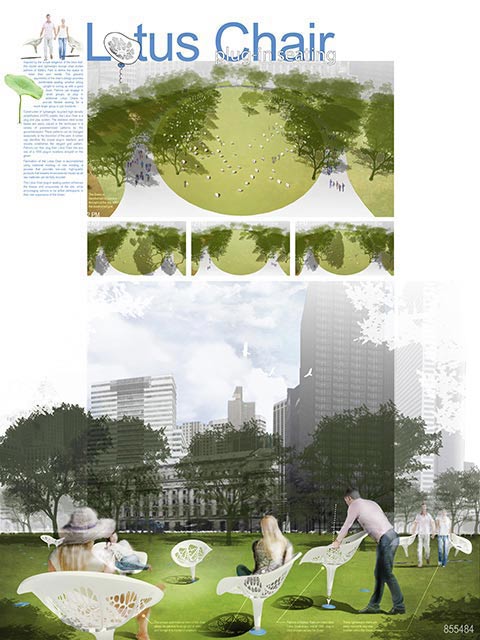 The Lotus Chair was an entry in an international competition for chair design for Battery Park in New York City. The conceptual premise was that given the chairs would be in storage every night, the patrons of the park could plug this "lotus" formed chair in a laced filigree pattern planted across the park's Green. (2013) The Lotus Chair was an entry in an international competition for chair design for Battery Park in New York City. The conceptual premise was that given the chairs would be in storage every night, the patrons of the park could plug this "lotus" formed chair in a laced filigree pattern planted across the park's Green. (2013) |
V.E.I.L.S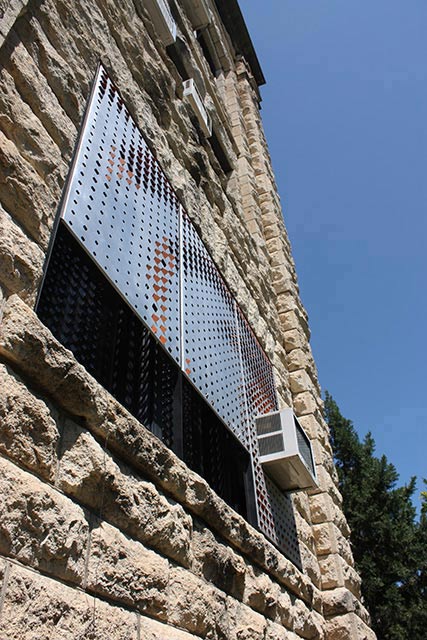 The Variant Exposure Intelligent Light Screen (V.E.I.L.S.) project was a 12-day Design-Build where the students were tasked to create an intervention in the Dean’s window, where temperatures could get to 120 degree during a sunny summer day. This aluminum perforated screen developed, creating a simple and elegant passive screen vanquishing any need for blinds and a much less need for AC. (Spring 2012) The Variant Exposure Intelligent Light Screen (V.E.I.L.S.) project was a 12-day Design-Build where the students were tasked to create an intervention in the Dean’s window, where temperatures could get to 120 degree during a sunny summer day. This aluminum perforated screen developed, creating a simple and elegant passive screen vanquishing any need for blinds and a much less need for AC. (Spring 2012) |
Dripple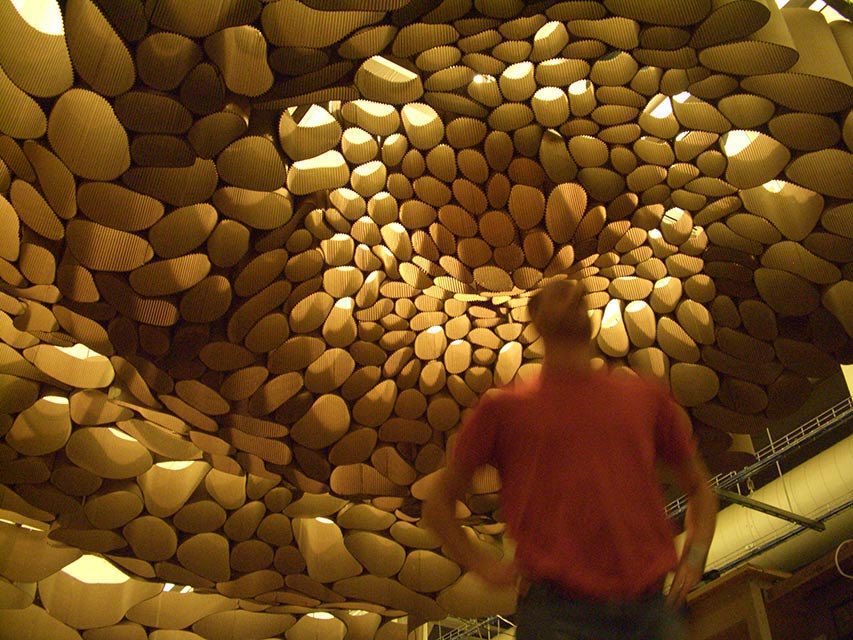 This 10-day Design-Build was to create an atmospheric transformation of the banal studio environment. The third-year students were tasked to conceptualize, budget and execute. The end result became a 15’x30’ light and environmental filter hovering over the top of the studio. (Spring 2011) This 10-day Design-Build was to create an atmospheric transformation of the banal studio environment. The third-year students were tasked to conceptualize, budget and execute. The end result became a 15’x30’ light and environmental filter hovering over the top of the studio. (Spring 2011) |
Bali Marina Research Centre
This design also won Juror's Choice at the Design Communications Association 2014 Faculty Design Awards. |
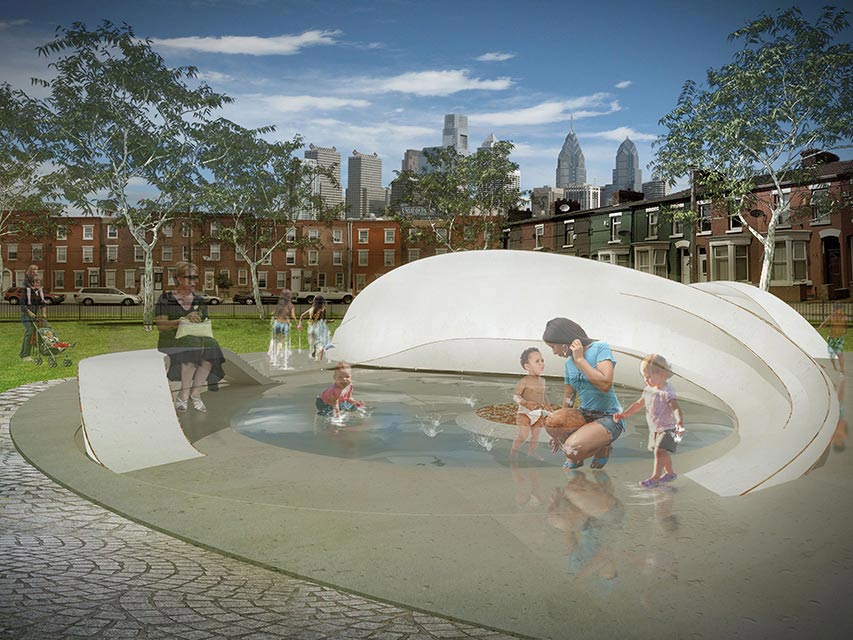
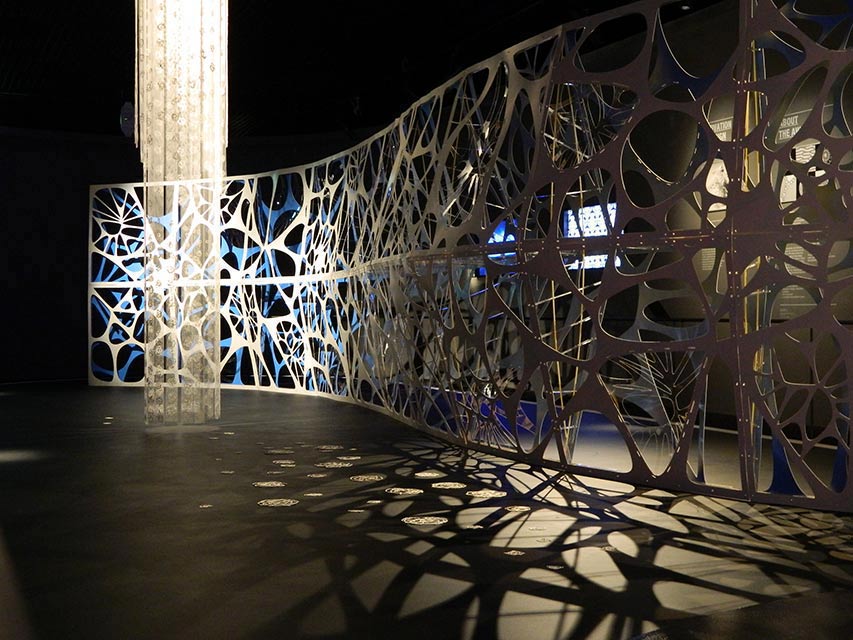 SpiderLace was a finalist for the Built Environment Competition during the Sydney, Australia Design Exposition in 2011. The sculpture was on exhibit in the Powerhouse Museum of Science and Design in Sydney, Australia during 2011 to 2013 and stands over 6 feet tall and 30 feet long.
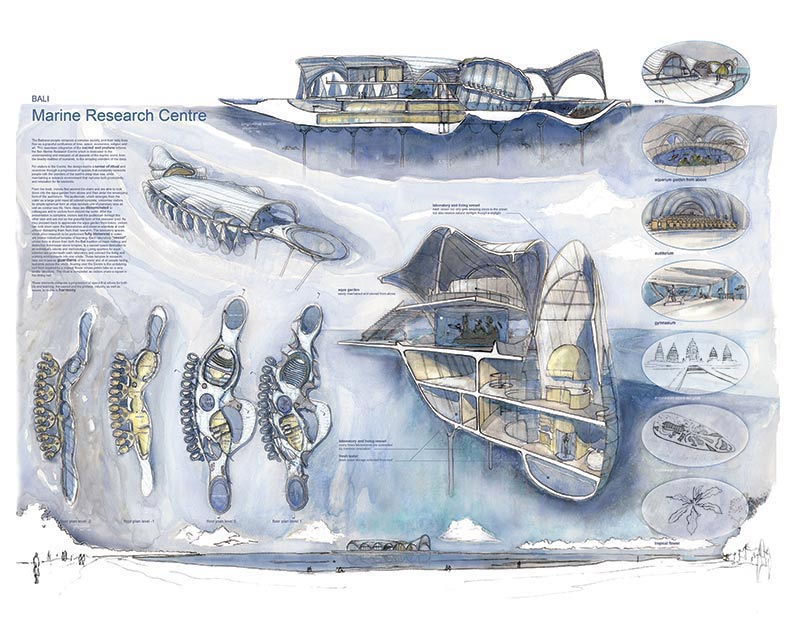 The Bali entry into an international ideas competition for a Marina Research Centre was Howe's first foray in parametric modeling. The concept for the building was to create a leviathan creature of the Centre, which would manifest itself as a literal and figurative protector of the Bali coastline during a tsunami, the main research performed at the Centre. (2010)
Papers
In proceedings of the 2013 Iberoamerican Society of Digital Graphics (SIGraDi). Departamento de Arquitectura | Universidad Técnica Federico Santa María. Valparaíso, Chile. November 20-22, 2013
2013 V.E.I.L.S. | Performance-Based Case Study
In proceedings of the Building Technology Educators’ Society Conference 2013 – Tectonics Of Teaching, Roger Williams University. Bristol, RI. July 12-13, 2013
In proceedings of the 2012 Design Communications Association Biannual National Conference: Graphic Quest - The Search for the Perfection in Design Communication. Oklahoma State University, Stillwater, OK: School of Architecture. October 21-24, 2012
In proceedings of 2011 ACADIA Regional: Parametricism: (SPC). University of Nebraska at Lincoln, Lincoln, NE. March 10-12, 2011
In the publication of Volume 33, 2011 Oz Journal Augment.
In proceedings of 2008 East Central ACSA Conference: Without a Hitch: New Directions in Prefabricated Architecture. University of Massachusetts Amherst. Amherst, MA. September 25-27, 2008